
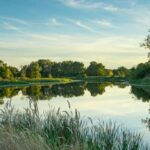

If you are looking for a peaceful place within about an hour of Warsaw, the Liwiec River Valley is definitely worth considering. It is a region known for its natural landscapes, sandy riverbanks, kayaking routes and quiet villages, yet it has still managed to keep much of its wild character.
The value of this area is confirmed by the presence of protected Natura 2000 sites, including Ostoja Nadliwiecka and the “Liwiec Valley” Special Protection Area for birds. This makes the region a good choice for people who want to spend time close to nature without travelling far from the capital.
A weekend or holiday by the Liwiec can be planned in many ways: as a kayaking trip, a family stay by the river, a cycling break, a quiet escape into nature or a comfortable stay in a private house near the Bug and Liwiec rivers.
1. What towns and villages are located on the Liwiec River?
The Liwiec is a left tributary of the Bug River and is about 142 km long. Its mouth is located in Kamieńczyk, not far from Wyszków. This is where the Liwiec finishes its course and flows into the wider Bug River.
Apart from Kamieńczyk, places located on or near the Liwiec include Mokobody, Wyszków, Liw, Węgrów, Starawieś, Paplin, Łochów, Barchów, Urle and Nadliwie. Among Warsaw residents, Kamieńczyk and Urle are especially popular destinations for short breaks, mainly because of their forests, river landscapes and convenient access from the city.
The main tributaries of the Liwiec include Stara Rzeka, Helenka, Muchawka, Kostrzyń, Czerwonka, Miedzanka and Osownica.
The Liwiec, sometimes also called Liw, is a typical lowland river. It meanders through a wide valley surrounded by fields, meadows and forests, mostly pine forests, with willows and alders growing along the banks. In many places, the riverbed is sandy and the water is relatively shallow.
At the same time, the Liwiec remains a natural river, so its character can change from one section to another. There are sandbanks, fallen trees, local deeper spots and seasonal fluctuations in water level. This natural variety is one of the reasons why the river is popular among kayakers and people looking for less urbanised places to relax.
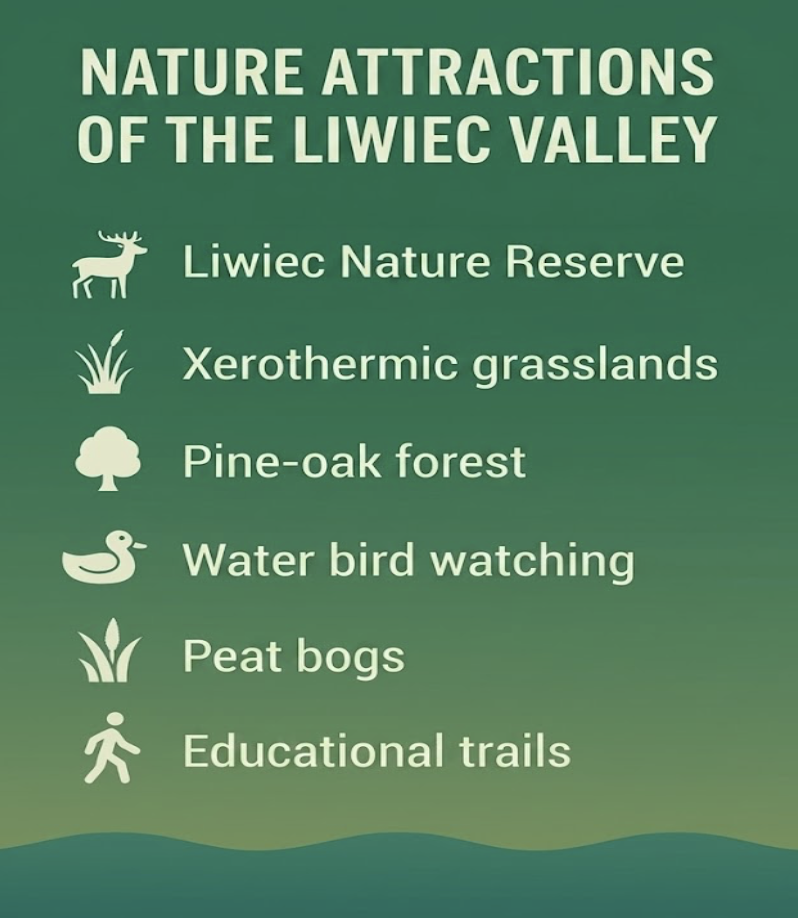
The Liwiec Valley offers diverse landscapes: sandy beaches, wet meadows, pine forests and habitats for animals such as roe deer, wild boar, hares, badgers, beavers and otters. The river and its valley are important areas for the protection of many plant and animal species.

2. Is the Liwiec deep?
For much of its course, especially in the lower section, the Liwiec is a fairly shallow river with a sandy bottom. This makes it attractive for families, beginner kayakers and people looking for calm places by the water.
However, the river is not equally shallow everywhere. In some sections, especially near bends, eroded banks or fallen trees, the depth may reach 1.5–2 metres. The water level also rises seasonally, especially in spring, autumn and after heavy rainfall.
Spring thaws and intense rain can create floodplains and change the character of the river. For this reason, even though the Liwiec is often seen as a calm and relatively safe river, it is still important to stay careful when swimming, kayaking or walking in the water.
The biggest advantages of the Liwiec are its sandy riverbanks, natural beaches and clear water. These are the features that make it so popular among people looking for a riverside escape near Warsaw.
3. Can you swim in the Liwiec?
There are several places along the Liwiec used for swimming and sunbathing. Some are organised bathing areas, while others are wild, unguarded beaches that require more caution.
Among the best-known places are:
Zalew nad Liwcem in Węgrów — a seasonal guarded bathing area with a sandy beach. In summer, the water quality is checked, and the place has a more recreational character.
Beaches on the Liwiec — including those in Barchów, Starowola and Świniotop. These are usually unguarded places with a more natural atmosphere. The water is often shallow and clear, which makes them popular with families.
The beach in Świniotop is located relatively close to Wyszków and Kamieńczyk. It is valued for its quiet surroundings and picturesque sandy escarpment. The beach in Barchów, in turn, is long and wide, with shallow water that encourages slow walks along the river.
When choosing a place to swim, safety should always come first. It is best to choose shallow sections, avoid strong currents, be careful where the riverbed is unknown and check current conditions before entering the water.

Before travelling, it is also worth checking the latest water quality information through official bathing water services. This is especially important in the case of organised bathing areas and seasonal beaches.
4. Is the Liwiec River clean?
The cleanliness of the Liwiec may vary depending on the section, season and current weather conditions. In general, the river is often considered clean and attractive for recreation, but before swimming it is always worth checking the latest local information.
In the past, the waters of the Liwiec required regular monitoring and improvement measures. Today, the condition of the river is assessed more positively in many places, but temporary problems may still occur, for example due to cyanobacterial blooms, pollution after heavy rainfall or increased tourist activity during the summer season.

For this reason, if you plan to swim or spend time on a beach, it is best to check current reports before your trip. Even if swimming is not recommended on a particular day, the Liwiec Valley still offers many other activities: kayaking, walking, cycling, sightseeing and peaceful relaxation in nature.
5. Beaches on the Liwiec River
There are several beaches and riverside places on or near the Liwiec. Some function as seasonal bathing areas, while others are wild and unguarded. Each of them has a different atmosphere.
- Zalew nad Liwcem near Węgrów is an organised bathing area with a sandy beach, usually open during the summer season. Visitors can find water equipment rental, a beach volleyball court, a barbecue area and a children’s playground.
- The beach in Starowola is one of the larger and more attractive beaches on the Liwiec. It is located on the inner side of a wide river bend, which gives it a very scenic character.
- The beach in Borzymy is a quieter sandy beach. It is less crowded, so it may appeal to people who prefer more peaceful places. Kayak rental may also be available nearby.
- The beach in Iły lies in the lower course of the Liwiec, before the river flows into the Bug in Kamieńczyk. It is more popular than some wild beaches, so on warm days there may be more visitors.
- The beach near Łochów is picturesquely located in a section where the river flows through a deeper riverbed. It is a good choice for people looking for calm views and a natural landscape.
- The beach in Barchów is wide, long and sandy. The river is quite shallow here, which makes it suitable for relaxed walks through the water and resting on the sand.
- The beach in Świniotop is a small, quiet beach not far from Wyszków and Kamieńczyk. The river is often shallow and clear here, and the place works well for a calm day by the water.
6. Kayaking on the Liwiec — where to plan a trip?
The Liwiec is one of the most interesting kayaking rivers in Mazovia. It flows through the South Podlasie Lowland and the Central Mazovian Lowland, creating a natural route for people who want to spend time actively but without rushing.
Kayaking on the Liwiec allows you to see river meanders, meadows, forests, sandy banks and wild birds. The river is not monotonous. Some sections are calm and easy, while others require avoiding obstacles or paying more attention to the route.
Popular kayaking routes on the Liwiec include:
| Route | Distance | Approximate duration |
|---|---|---|
| Oszczerze — Liw | about 17 km | 4–5 hours |
| Wyszków — Liw | about 16 km | about 6 hours |
| Pierzchały — Liw | about 13 km | 3–4 hours |
| Grodzisk — Liw | about 10 km | up to 3 hours |
| Sowia Góra | about 7 km | 2–3 hours |
| Mokobody bridge — Wólka Proszewska | about 5 km | 1–1.5 hours |
| Urle railway bridge — Kamieńczyk | about 15 km | 3–5 hours |
There are many kayak rental points and companies organising trips in the region, so finding an offer should not be difficult. Before arriving, it is worth comparing routes, prices and reviews, especially if you are planning a trip in the summer season.
Booking kayaks in advance is a good idea. Most organisers provide kayaks, paddles and life jackets, and often also waterproof bags for luggage. Companies that organise trips usually also help with transport to the starting point and from the finish.

During a kayaking trip on the Liwiec, you can combine physical activity with nature watching. There are also interesting places to visit near the river, including Liw Castle and the wooden church in Jarnice.
7. House for rent near the Liwiec River
The accommodation offer in the Liwiec Valley is varied, but before choosing a place to stay, it is worth thinking about what kind of trip you are planning. A family with children, a couple looking for a quiet weekend and a group of friends planning kayaking or cycling may all have different needs.
If you are looking for a comfortable weekend or a longer stay, a house for rent in Kamieńczyk can be a very good option. The location is convenient because it is close to the place where the Liwiec flows into the Bug, giving guests access to the attractions of both rivers.
The house in Kamieńczyk stands out thanks to its carefully designed interior and amenities that make the stay comfortable regardless of the weather. Guests can use a sauna, swimming pool, hot tub, elliptical trainer, games and books.
In the large garden, there is a playground for children, as well as sun loungers, a barbecue and a garden table with chairs. The house is air-conditioned and equipped with anti-burglary shutters and an alarm system. A parking space is also available on the property.

This house can serve as a convenient base for holidays by the Liwiec, a weekend by the Bug, a family stay, a romantic trip or an active getaway with kayaking and cycling.
8. Holidays on the Liwiec
Riverside sunbathing is one of the main reasons why people come to the Liwiec Valley, but it is far from the only attraction. The river is suitable for swimming in selected places, kayaking, fishing and quiet relaxation by the water. The entire region also offers many natural, historical and cultural attractions.
Interesting natural places include:
- Nadbużański Landscape Park — one of the larger landscape parks in Poland. Part of the Liwiec Valley lies within its area. The park is known for rich plant and animal life, oxbow lakes of the Bug River and large forest complexes. It is a good destination for walking and cycling.
- The “Jegiel” Nature Reserve — located about 7 km east of Kamieńczyk. Its name comes from the Kurpie word “jagieł”, meaning spruce. The reserve protects spruce forest growing on peat, a wet boreal forest community. Some trees are about 120 years old, and the oldest specimens are around 200 years old.
- Sowia Góra — a viewpoint not far from Liw Castle. It offers views over the borderland of Mazovia and Podlasie and the Liwiec Valley. It is also a good place for birdwatching and learning about local nature thanks to educational boards.
- Zalew Węgrowski — a reservoir created from an oxbow lake of the Liwiec. It has a guarded bathing area, a pier, a swimming zone and fish ponds. In the summer season, children can use additional attractions such as a paddling pool, playground and activity zone.
The Liwiec Valley also has many historical and cultural places. The most interesting include:
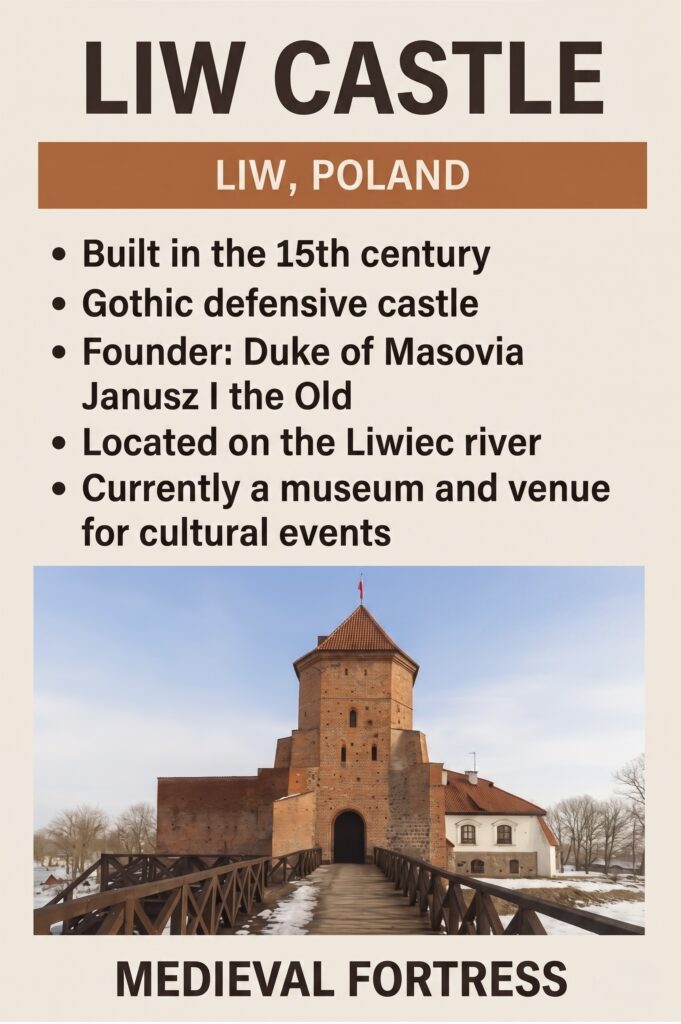
Liw Castle — its origins date back to the first half of the 15th century. Today, the castle complex includes remains of a Gothic defensive castle, including a tower, walls and Gothic cellars. There is also a Baroque manor from 1782.
The Armoury Museum operates in the castle, and in summer the site hosts knight tournaments and outdoor events.
Other interesting palaces and manors in the region include:
- Łochów Palace and Farm Complex — a neo-Renaissance palace from the 19th century, now functioning as a hotel and conference centre,
- The Larch Manor in Sucha — a restored wooden manor from the 18th century, presented in the Museum of Wooden Architecture in Nowa Sucha,
- The Palace in Starawieś — the Radziwiłł family palace with a characteristic clock tower,
- The Manor in Paplin — a late Baroque manor from the 18th century with a wavy gable typical of noble residences.
- An interesting idea for a trip is the “Strongholds — Castles — Manors — Palaces” trail in the Liwiec Valley. It leads through places connected with the history of the region and former noble residences.
- It is also worth considering the Museum of Wooden Architecture in Sucha, the Trail of the Dukes of Mazovia and the Great Lithuanian Route, a historic trade route passing through Węgrów.
9. A weekend on the Liwiec
The Liwiec Valley is suitable not only for a longer holiday, but also for a short weekend trip from Warsaw. Its proximity to the capital is one of the region’s greatest advantages. The journey by car usually takes about an hour, so you do not need to plan a long trip to feel a clear change of surroundings.
During a short stay, it is worth deciding in advance what you want to focus on. You can plan sunbathing, swimming, kayaking, fishing, sightseeing or simply quiet walks and rest in the garden.
One of the most interesting places in the region is the 15th-century castle in Liw, home to the Armoury Museum. It is a good destination for people interested in history, old weapons and the atmosphere of medieval Mazovia. Outdoor events, including knight tournaments, are held here regularly.
There are also historic manors and palaces in the area, including the palace in Starawieś and the manor in Paplin. Some of them can be visited, while others function as hotels or remain interesting points on a sightseeing route.
A good way to discover the region is the Liwiec Valley Trail. It can be explored on foot, by bike or partly by kayak, combining activity with scenic views and local monuments.
If the aim of your trip is mainly relaxation, the surroundings of the Liwiec are also a very good choice. A walk in the forest, a picnic by the river, a bike ride or a slow afternoon on the terrace of the house in Kamieńczyk may be enough to feel that you have truly left the city behind.
A weekend on the Liwiec does not require a complicated plan. The greatest value of this place is the possibility of quickly escaping Warsaw and entering a different rhythm: calmer, closer to nature and more free.