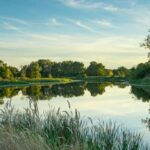
The Bug River is one of the few large rivers in Europe that has retained a wild, natural character. Its valley is still less obvious than many popular tourist regions in Poland, which makes it especially attractive for people looking for peace, space and close contact with nature.
A trip to the Bug River is a good idea both for an active weekend and for a slower holiday away from the city. You can walk along the river, go kayaking, cycle through quiet villages, watch birds or simply rest in a peaceful setting. From Warsaw, many places along the Bug can be reached in about an hour, so even a short break is enough to feel the atmosphere of this unique river.
1. How does the Bug River flow through Poland?
The Bug is one of the longest rivers in Poland. Its total length is about 774 kilometres, of which roughly 587 kilometres run through Polish territory. The river begins in Ukraine, in the village of Verkhobuzh, located in the Podolian Upland.
For part of its course, the Bug forms a natural border between Poland and Ukraine, and later between Poland and Belarus. This border section runs from the area of Gołębie to Niemirów, where the river stops serving as a state border. From there, it continues north through the southern part of the Podlaskie Voivodeship and then enters the Mazowieckie Voivodeship. It also flows through the eastern part of the Lubelskie Voivodeship.
Near Serock, the Bug flows into the Narew, close to the Zegrze Reservoir. This area is well known to Warsaw residents as a popular destination for day trips, water sports and short weekend getaways.

Towns and villages located on or near the Bug River within a relatively short distance from Warsaw include Małkinia Górna, Brok, Brańszczyk, Kamieńczyk, Wyszków, Popowo Kościelne, Kania Polska and Arciechów.
The river is also an important ecological corridor. Its valley supports rich plant and animal life, including numerous bird species, insects and butterflies. Nearly 100 species of butterflies have been recorded in this region, which makes the Bug Valley an especially valuable natural area.
2. Where does the Bug River start and where does it end?
The Bug flows through three countries: Ukraine, Poland and Belarus. In some places, it acts as a natural state border, but it also connects different historical, cultural and natural regions.
The river starts in the Podolian Upland in Ukraine. It ends its course as a left tributary of the Narew, flowing into the area of the Zegrze Reservoir. The reservoir is one of the most popular recreational places in Mazovia and attracts both tourists and residents of nearby towns.
The longest section of the Bug lies in Poland. Because the river was not heavily regulated for many years, it still has a largely natural shape. This is why its banks are often wild, open and diverse. Along the river, you can find sandy shallows, oxbow lakes, flood meadows, riparian forests and quiet places that provide shelter for birds, mammals, fish, amphibians and insects.
Several important Natura 2000 areas are located along the Bug. These include:
- the Middle Bug Valley,
- the Polesie Bug Valley,
- the Western Volhynian Bug Valley,
- the Lower Bug Valley, which is partly connected with the Nadbużański Landscape Park.
These protected areas are important for biodiversity. They preserve valuable habitats such as floodplain forests, wet meadows, oxbow lakes and natural river ecosystems. The Bug Valley also helps different species migrate between regions, which is why it has ecological significance not only locally, but also on a wider European scale.
3. Is the Bug River deep?
The depth of the Bug River varies significantly depending on the section, season, rainfall and current water level.
In its upper course, the Bug is usually quite shallow. In many places, the depth does not exceed one metre. In the middle course, the river is generally deeper, usually ranging from about 1.5 to 2.5 metres, although in some sections it may reach 3–4 metres.
The lower course is the deepest part of the river. In some places, the water can reach around 5 metres, and according to some sources, even more.
It is important to remember that the Bug is a dynamic river. A place that looked shallow a short time ago can become much deeper after rainfall or a rise in water level. The river also has sandy shallows, deeper holes, stronger currents and an uneven bottom.
For this reason, caution is always necessary near the Bug. This applies to swimming, fishing, kayaking and any other activity by the water. Even familiar places can change after storms, floods or long periods of drought.
4. Is the Bug River clean?
The cleanliness of the Bug River cannot be assessed in a simple way. Water quality depends on the specific section of the river, the season, the amount of rainfall, the water level and the parameters being tested.
The Bug is not considered one of the cleanest rivers in Poland. Its water quality is affected by several factors, including transboundary pollution from Ukraine and Belarus. Municipal and industrial wastewater has had an impact on the river, and international actions aimed at improving water quality have not always been sufficient.
In some sections, coli bacteria, organic pollution, microbiological contamination and nutrients such as phosphates and nitrogen compounds may be detected. This means that the water is not suitable for bathing everywhere.
At the same time, the situation is not identical along the entire river. In some tributaries and local sections, water quality has improved, partly thanks to investment in wastewater treatment plants and environmental initiatives.
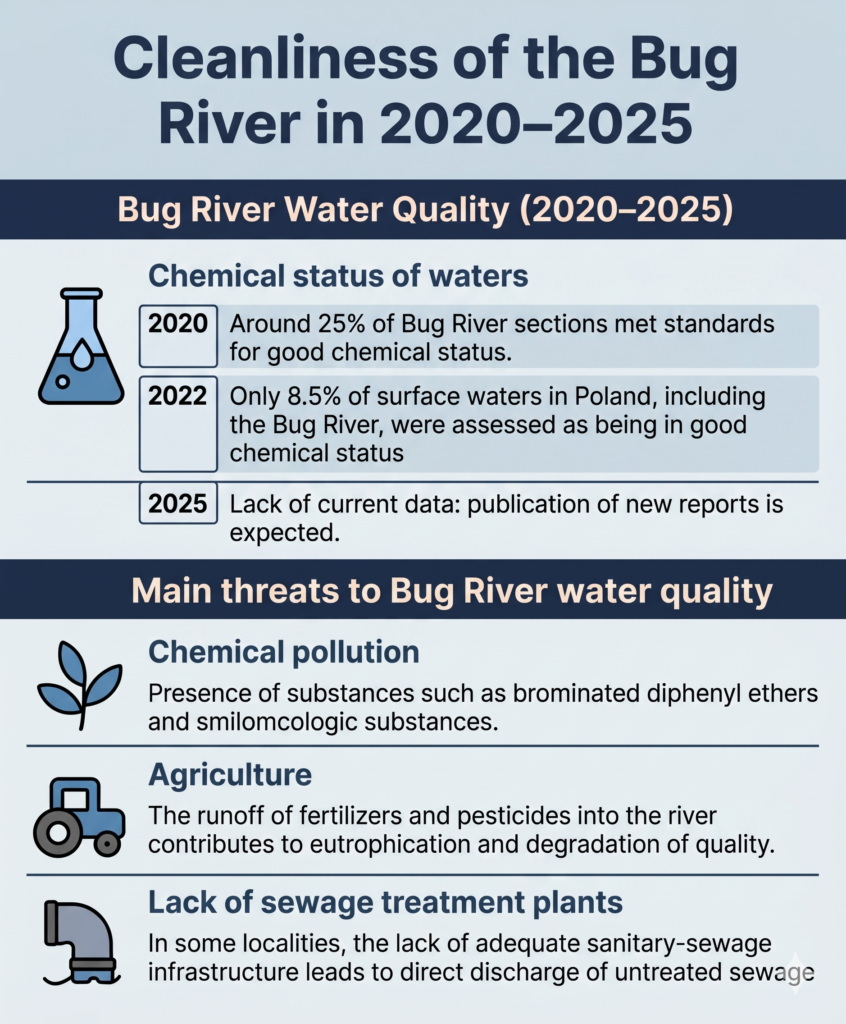
Water quality is regularly monitored. In some local bathing areas, tests have confirmed that the water meets the requirements for safe bathing, but this should always be checked for the specific place and date before planning to swim.
Clean-up initiatives are also becoming more common. Campaigns such as “Operation Clean River” help remove waste from riverbanks and increase public awareness of the need to protect natural river landscapes.
Despite water quality problems in some areas, the Bug Valley remains a highly valuable natural region that deserves careful protection and responsible tourism.
5. Does the Bug River flow into the Narew?
On some older hydrographic maps, the Bug was treated as the main river and the Narew as its tributary. Today, despite the fact that the Bug is longer than the Narew, it is officially considered a tributary of the Narew.
Just before Serock, the Bug joins the Narew. Together, their waters form the Zegrze Reservoir, a large artificial lake created after the construction of the dam in Dębe in 1963.
The Zegrze Reservoir, often called Lake Zegrze, lies about 30 kilometres north of Warsaw. It is one of the most popular leisure areas near the capital.

Its attractions include:
- beaches and bathing areas,
- water sports, including sailing, windsurfing, kitesurfing, SUP, kayaking and pedal boating,
- fishing, with species such as zander, eel, bream, roach and white bream,
- walking and cycling routes,
- historic sites, including Zegrze Fortress, the ruins of the Szaniawski Manor House in Jadwisin and the parish church in Serock.
A major advantage of the Zegrze Reservoir is its easy access. It can be reached from Warsaw both by car and by public transport, which makes it a convenient choice for a short trip.
6. The Bug River — interesting facts
The Bug River has a rich history and many stories connected with it. In the past, it served as an important transport and trade route, linking different regions. Traces of former navigation can still be seen in some places in the form of old ports, marinas and river crossings.
Many places along the Bug are also associated with legends about sunken treasures. According to local stories, during wars people would hide valuables in the river to protect them from enemies and recover them later. Not all of these treasures were ever found.
The Bug is also one of the most important border rivers in Europe. It flows through Poland, Ukraine and Belarus, and in many riverside villages you can still feel the influence of different cultures. In some places, there are bilingual or even trilingual signs, and local residents may speak Polish, Ukrainian, Belarusian or regional borderland dialects.
Another characteristic feature of the Bug is the limited number of bridges on many border sections. In some places, crossings operate only occasionally, for example during pilgrimages or special events. On certain stretches, cable ferries are still used. For local residents, they are a practical way to get to the other bank, while for visitors they can be an interesting attraction.

The Bug also appears in literature, poetry and songs as a symbol of the border between East and West. It is often associated with cultural, historical and civilisational borderlands. Its landscapes have also been used as a background in historical and war films.
7. Holidays by the Bug River
A holiday by the Bug River can be peaceful, active or a mix of both. The valley offers many ways to spend time outdoors, depending on your needs and mood.
Popular activities include:
- water activities, such as kayaking, boat trips, catamaran cruises and fishing,
- land activities, such as hiking, cycling, horse riding and Nordic walking.
Those who prefer a quieter stay can choose agritourism farms, campsites or private houses for rent. Many accommodation options near the Bug offer comfortable rooms, regional food, playgrounds for children, barbecue areas, bonfire spots and direct access to nature.
If you plan to rest on a beach by the Bug, it is worth checking the current water quality in advance. Some beaches are wild and unguarded, so safety should always come first.
Places worth visiting during a holiday by the Bug include:
- Drohiczyn — the former capital of Podlasie, known for its beautiful panorama of the river, meadows and meanders.
- Mielnik — a small town with castle ruins, a viewpoint and limestone hills.
- Janów Podlaski — famous for its Arabian horse stud farm, a good destination for a family trip.
- Włodawa — a town of three cultures, with a synagogue, an Orthodox church and a Catholic church.
- The Bug Gorge Landscape Park — an area known for its scenic river bends, natural landscapes and unique atmosphere.
| Town or village | Distance from Warsaw | Main attractions |
|---|---|---|
| Wyszków | about 55 km | beach on the Bug River, kayaking, city park |
| Brańszczyk | about 60 km | Nadbużański Landscape Park, kayaking, beach |
| Kamieńczyk | about 60 km | ethnographic open-air museum, kayaking on the Bug, historic centre |
| Brok | about 85 km | church in Brok, bathing area, river cruises |
| Łochów | about 70 km | Łochów Palace, Nadbużański Landscape Park |
| Serock | about 40 km | market square, pier, boat cruises |
| Kuligów | about 40 km | beach, ferry crossings, kayaking |
| Popowo Kościelne | about 65 km | silence, wild beaches on the Bug, walking routes |
| Zuzela | about 100 km | Museum of Primate Wyszyński, Bug River landscapes |
Towns and villages by the Bug River located near Warsaw.
Cyclists will also find many interesting routes in this region. Scenic trails run along the river, including sections of Green Velo, which follows the Bug through Podlasie and the Lublin region.
8. A weekend by the Bug River near Warsaw
A weekend by the Bug is a simple way to escape the city without travelling far. Within about an hour from Warsaw, you can reach places with riverside beaches, forests, kayak routes, fishing spots, walking paths and small towns with local character.
Some destinations worth considering include:
1.Kamieńczyk — the journey from Warsaw usually takes about 55–60 minutes. Local attractions include:
- the historic part of the village with old fishermen’s houses,
- wild beaches by the Bug,
- kayaking on the Bug and Liwiec rivers,
- local fish bars and atmospheric cafés.
2.Kuligów — located about 50 minutes from Warsaw. Visitors appreciate:
- a wide sandy beach by the Bug,
- the seasonal Kuligów–Popowo ferry crossing,
- the Nadbużański Landscape Park,
- a peaceful setting ideal for walking and cycling.
3,Serock — around 40–50 minutes from Warsaw by car. It is known for:
- a pier on the Narew and Bug rivers,
- boat cruises on the Zegrze Reservoir,
- a pleasant market square with cafés and restaurants,
- kayak and pedal boat rentals.
4.Brańszczyk — about one hour from Warsaw. It is a good place for:
- quiet beaches by the Bug,
- walks in the Nadbużański Landscape Park,
- organised kayaking trips,
- resting in a peaceful natural setting.
A weekend by the Bug can be spent actively or slowly. You can go kayaking, cycle through villages, fish, walk along the river, visit local attractions or simply sit by the water. The variety of possibilities makes this region suitable for different types of travellers.
9. House for rent by the Bug River
The Bug River region offers many accommodation options: agritourism farms, rooms, campsites and private houses. If you value privacy, comfort and a higher standard, it is worth choosing a house in Kamieńczyk.
The house for rent in Kamieńczyk stands out thanks to its carefully designed interior and a wide range of amenities. It is a good choice for people who want to combine nature, comfort and full independence during their stay.
Guests can use:
- a sauna,
- a swimming pool,
- a hot tub,
- an elliptical trainer,
- games and books,
- a children’s play area in the garden,
- sun loungers,
- a barbecue,
- a garden table with chairs.
The house is also equipped with air conditioning, anti-burglary shutters and an alarm system. A parking space is available on the property, which makes the stay convenient for families, couples and groups of friends.
A house in Kamieńczyk can serve as a comfortable base for walks, kayaking, cycling trips, fishing or slow relaxation in the garden. It is a place for people who want to stay close to the Bug and Liwiec rivers, while still enjoying privacy, comfort and the freedom to rest at their own pace.
10. Bug River attractions
The Bug Valley is full of attractions for travellers with different interests. It offers nature, history, water activities, cycling routes and atmospheric towns.
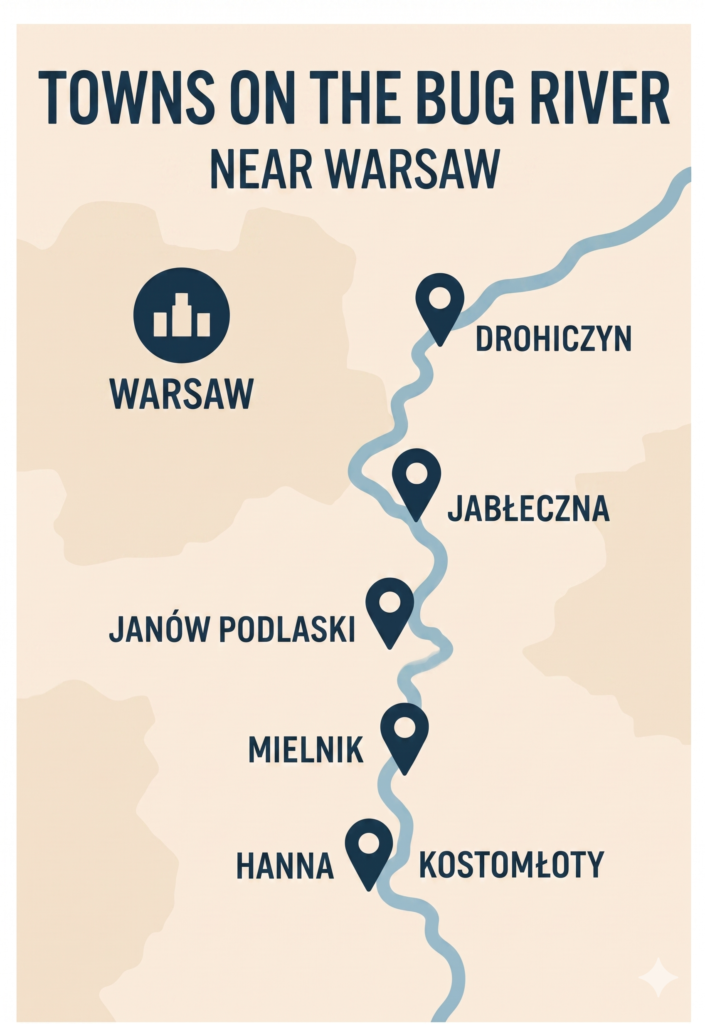
Among the most interesting options are:
Water activities, including:
- kayaking — the Bug is suitable for both beginners and more experienced kayakers. Rental points and companies organising trips operate in many places along the river, including the areas of Drohiczyn, Mielnik and Włodawa;
- fishing — the Bug is home to pike, catfish, zander, bream, roach and other species. Anglers should remember to obtain the required permit and check local rules before fishing.
Nature and landscapes, including:
- Nadbużański Landscape Park — a protected area full of river bends, oxbow lakes, flood meadows, rich vegetation and birdlife;
- the Podlasie Bug Gorge — one of the most scenic sections of the river;
- the tripoint near Włodawa — the place where Poland, Ukraine and Belarus meet;
- islands and oxbow lakes — important habitats for animals and excellent places for nature observation;
- viewpoints in Drohiczyn and Mielnik, offering wide views over the river valley.
Towns and villages with history and atmosphere, including:
- Drohiczyn — a former capital of Podlasie, beautifully located above the Bug. It is worth seeing Castle Hill, monasteries, Baroque churches and the Orthodox Church of St Nicholas.
- Mielnik — a small town with ruins on a hill, a chalk mine with a viewing terrace and a historic Orthodox church. There is also a local vineyard in the area.
- Janów Podlaski — known for one of the world’s most famous Arabian horse stud farms.
- Kryłów — a small town with castle ruins on an island and a neo-Gothic gate.
One of the most scenic cycling routes in Poland also runs through the Bug Valley — the Bug River Cycling Trail. Along the river, you can stop at agritourism farms, try local food and experience the atmosphere of the region in close contact with nature.
The Bug is a river that combines wild landscapes, history, water activities and silence. That is why a stay in Kamieńczyk or another riverside destination can be a great alternative for anyone who wants to spend time near Warsaw, but feel as if they have entered a completely different world.